Cinematic samurai duel, one continuous take, 8K ultra-high definition,
extremely sharp detail, photorealistic live-action, movements with real
weight like sword choreography performed by actual stunt performers,
no CG effects. A dynamic one-take where the camera itself is part of
the action — diving in and out of the heart of the duel like an FPV drone.
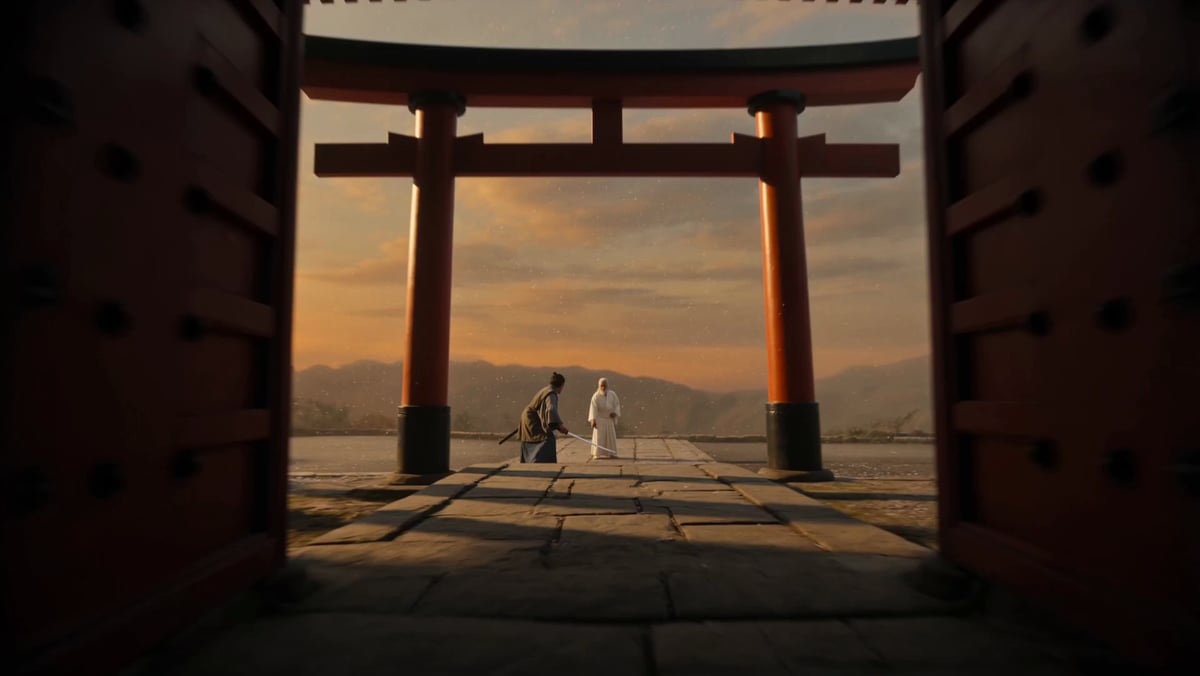
Setting: Meiji-era Japan, the front courtyard of an old Shinto shrine
at dusk. Wide stone pavement, a red torii gate, stone steps, low
golden-hour backlight. Cherry blossom petals drift naturally in the
wind; dust particles float in the shafts of light.
Characters and sword styles:
— Black-haired swordsman: ash-grey gi with dark navy hakama, a worn
grey haori, short tied-back black hair, weathered lines across his left
cheek. A speed-type swordsman — low forward-leaning stance, relentless
quick footwork, slides and sharp changes of direction, torrents of
two-handed consecutive cuts. Always the first to move, always closing in.
— Elder swordsman: white beard, white gi, upright posture. A
weight-type swordsman — he barely moves. A rooted, immovable stance;
he deflects attack lines with no more than a half-step, parries the
opponent's cuts with blade angle alone, then drives down a single
massive counterstrike. One of his steps carries the weight of five of
the black-haired swordsman's.
Both have the texture of real actors — sweat, breath, the weight of
fabric, utterly lifelike.
0-2.5s: The camera slides out from behind a torii pillar, skimming low
along the ground — cutting through drifting cherry blossoms into the
space between the two swordsmen. The black-haired swordsman stays low,
shifting his weight in small restless movements, alive with motion;
the elder stands completely still like a rock, sword tip lowered — the
contrast of stillness and motion. The instant the black-haired
swordsman's foot scrapes the stone, the camera stops.
2.5-6s: The black-haired swordsman explodes first — a lightning zigzag
charge off the ground, the camera locked tight over his shoulder,
sprinting with him. The elder never leaves his spot — at the last
instant of the charge he shifts a half-step aside, deflects the first
cut along his blade, and uses the recoil to drive a heavy downward
counterstrike. The black-haired swordsman slides low beneath it,
slips behind him, and cuts horizontally — the elder, without even
turning, raises his sword behind his back and blocks it. The camera
threads through the narrow gap between the two and whips-pans out.
All at real speed, no slow motion.
6-8.5s: The black-haired swordsman's fastest thrust and the elder's
full-bodyweight downward cut collide head-on — extreme slow motion
ONLY at the exact instant the blades meet. During the slow motion,
only the camera keeps moving fast: spiraling upward around the locked
blades, rotating from a low angle up to a high angle. Through the
frozen cherry blossoms, the black-haired swordsman's entire body
strains, jaw clenched — while the elder's expression does not move at
all. The contrast of the power struggle is rendered in extreme clarity.
8.5-12s: Snap back to real speed — the camera plunges vertically from
above, back into the fight. The black-haired swordsman leaps up and
down the stone steps, unleashing consecutive cuts from every direction —
the elder holds his ground at the middle of the steps, not yielding a
single step, deflecting everything. Parry, redirect, and between them
only two counterstrikes — the second one grazes the hem of the
black-haired swordsman's haori and slices a piece clean off. The camera
circles the two in a fast low orbit, blades slashing just past the lens.
12-15s: The final, mightiest clash — the black-haired swordsman charges
in with a full-speed leaping strike, and the elder, for the first time,
plants both feet firmly and cuts back with his entire body weight
behind the blade. The recoil of the collision hurls both men apart in
opposite directions — the camera pulls back sharply with the recoil,
rising like a crane. The black-haired swordsman twists in midair,
skidding into a rolling landing; the elder is pushed back only a
single step and remains standing — each returning to his starting
position in his own style. The camera descends and settles into the
same symmetrical composition as the opening: blades leveled at each
other once more, the severed haori scrap drifting down among the
cherry blossoms, and the film ends in taut silence.
Camera: an unbroken FPV-drone-style one-take from start to finish —
low ground-skimming push-in → over-the-shoulder sprint alongside the
black-haired swordsman → threading between the two swordsmen →
whip-pan → spiral ascent during the slow motion → vertical dive back
in → fast low orbit → sharp pull-back crane rise → descent into the
symmetrical closing composition (bookend framing). Camera shake exists
as befits live action, but restrained so the action always reads
clearly.
Style: live-action drama. 8K ultra-high resolution, anamorphic lens,
the natural contrast of live-action cinema, golden-hour backlight and
long shadows at dusk, desaturated Netflix period-drama color grading.
No afterimages whatsoever — only physically real dust, petals, fabric,
and metallic reflections; motion trails only as real blade glints.
Slow motion exists ONLY in the 6-8.5s blade-collision segment, and
even there the camera keeps moving fast. Everything else is at real
speed.
Audio: no background music. Diegetic sound only — the contrast between
the black-haired swordsman's quick light footsteps and the elder's
rare but heavy single step, the sharp whistle of blades cutting air,
the long grinding scrape of steel when deflecting and the dull thud of
counterstrikes, one enormous elongated steel impact during the slow
motion, the black-haired swordsman's ragged breathing against the
elder's calm breath, the roar of the final clash and two distinct
landing sounds — a skidding roll and a single solid step —
then silence.
16:9, one continuous take.
Cinematic samurai duel, one continuous take, 8K ultra-high definition,
extremely sharp detail, photorealistic live-action, movements with real
weight like sword choreography performed by actual stunt performers,
no CG effects. A dynamic one-take where the camera itself is part of
the action — diving in and out of the heart of the duel like an FPV drone.
Setting: Meiji-era Japan, the front courtyard of an old Shinto shrine
at dusk. Wide stone pavement, a red torii gate, stone steps, low
golden-hour backlight. Cherry blossom petals drift naturally in the
wind; dust particles float in the shafts of light.
Characters and sword styles:
— Black-haired swordsman: ash-grey gi with dark navy hakama, a worn
grey haori, short tied-back black hair, weathered lines across his left
cheek. A speed-type swordsman — low forward-leaning stance, relentless
quick footwork, slides and sharp changes of direction, torrents of
two-handed consecutive cuts. Always the first to move, always closing in.
— Elder swordsman: white beard, white gi, upright posture. A
weight-type swordsman — he barely moves. A rooted, immovable stance;
he deflects attack lines with no more than a half-step, parries the
opponent's cuts with blade angle alone, then drives down a single
massive counterstrike. One of his steps carries the weight of five of
the black-haired swordsman's.
Both have the texture of real actors — sweat, breath, the weight of
fabric, utterly lifelike.
0-2.5s: The camera slides out from behind a torii pillar, skimming low
along the ground — cutting through drifting cherry blossoms into the
space between the two swordsmen. The black-haired swordsman stays low,
shifting his weight in small restless movements, alive with motion;
the elder stands completely still like a rock, sword tip lowered — the
contrast of stillness and motion. The instant the black-haired
swordsman's foot scrapes the stone, the camera stops.
2.5-6s: The black-haired swordsman explodes first — a lightning zigzag
charge off the ground, the camera locked tight over his shoulder,
sprinting with him. The elder never leaves his spot — at the last
instant of the charge he shifts a half-step aside, deflects the first
cut along his blade, and uses the recoil to drive a heavy downward
counterstrike. The black-haired swordsman slides low beneath it,
slips behind him, and cuts horizontally — the elder, without even
turning, raises his sword behind his back and blocks it. The camera
threads through the narrow gap between the two and whips-pans out.
All at real speed, no slow motion.
6-8.5s: The black-haired swordsman's fastest thrust and the elder's
full-bodyweight downward cut collide head-on — extreme slow motion
ONLY at the exact instant the blades meet. During the slow motion,
only the camera keeps moving fast: spiraling upward around the locked
blades, rotating from a low angle up to a high angle. Through the
frozen cherry blossoms, the black-haired swordsman's entire body
strains, jaw clenched — while the elder's expression does not move at
all. The contrast of the power struggle is rendered in extreme clarity.
8.5-12s: Snap back to real speed — the camera plunges vertically from
above, back into the fight. The black-haired swordsman leaps up and
down the stone steps, unleashing consecutive cuts from every direction —
the elder holds his ground at the middle of the steps, not yielding a
single step, deflecting everything. Parry, redirect, and between them
only two counterstrikes — the second one grazes the hem of the
black-haired swordsman's haori and slices a piece clean off. The camera
circles the two in a fast low orbit, blades slashing just past the lens.
12-15s: The final, mightiest clash — the black-haired swordsman charges
in with a full-speed leaping strike, and the elder, for the first time,
plants both feet firmly and cuts back with his entire body weight
behind the blade. The recoil of the collision hurls both men apart in
opposite directions — the camera pulls back sharply with the recoil,
rising like a crane. The black-haired swordsman twists in midair,
skidding into a rolling landing; the elder is pushed back only a
single step and remains standing — each returning to his starting
position in his own style. The camera descends and settles into the
same symmetrical composition as the opening: blades leveled at each
other once more, the severed haori scrap drifting down among the
cherry blossoms, and the film ends in taut silence.
Camera: an unbroken FPV-drone-style one-take from start to finish —
low ground-skimming push-in → over-the-shoulder sprint alongside the
black-haired swordsman → threading between the two swordsmen →
whip-pan → spiral ascent during the slow motion → vertical dive back
in → fast low orbit → sharp pull-back crane rise → descent into the
symmetrical closing composition (bookend framing). Camera shake exists
as befits live action, but restrained so the action always reads
clearly.
Style: live-action drama. 8K ultra-high resolution, anamorphic lens,
the natural contrast of live-action cinema, golden-hour backlight and
long shadows at dusk, desaturated Netflix period-drama color grading.
No afterimages whatsoever — only physically real dust, petals, fabric,
and metallic reflections; motion trails only as real blade glints.
Slow motion exists ONLY in the 6-8.5s blade-collision segment, and
even there the camera keeps moving fast. Everything else is at real
speed.
Audio: no background music. Diegetic sound only — the contrast between
the black-haired swordsman's quick light footsteps and the elder's
rare but heavy single step, the sharp whistle of blades cutting air,
the long grinding scrape of steel when deflecting and the dull thud of
counterstrikes, one enormous elongated steel impact during the slow
motion, the black-haired swordsman's ragged breathing against the
elder's calm breath, the roar of the final clash and two distinct
landing sounds — a skidding roll and a single solid step —
then silence.
16:9, one continuous take.Jade%20Mono