A 15-second photorealistic live-action medieval fantasy battle sequence, edited like a high-budget epic feature film.
Multiple cinematic shots, dynamic cutting allowed, large-scale battle choreography, fast but clear action editing.
No BGM, no music, no score, no soundtrack.
Use only realistic diegetic sound: war horses thundering across dry ground, armor clinking, leather creaking, knights roaring, swords clashing, shields breaking, spears snapping, horses screaming, soldiers falling, heavy breathing, and the roar of a massive battlefield.
Every frame should look like a premium cinematic film still from a high-budget medieval fantasy war movie.
The visual tone should be warm, yellowish, dusty, and cinematic — a golden ochre battlefield palette, sunlit haze, dry dust in the air, warm highlights on armor, muted amber shadows, and a slightly aged epic film texture.
Avoid gloomy blue-gray color grading, cold rainy tones, night scenes, dark muddy images, or overly clean digital visuals.
Do not show a castle.
Do not show arrows.
Do not show archers.
The focus is cavalry charge, cavalry collision, brutal close-quarters melee, and the king’s sword struggle.
The frame should contain only battlefield, cavalry, enemy riders, infantry, horses, dust, swords, shields, spears, and hand-to-hand combat.
0–2s:
The scene begins with the cavalry already charging at full speed.
Use a low, fast side-tracking shot, not a static frontal lineup.
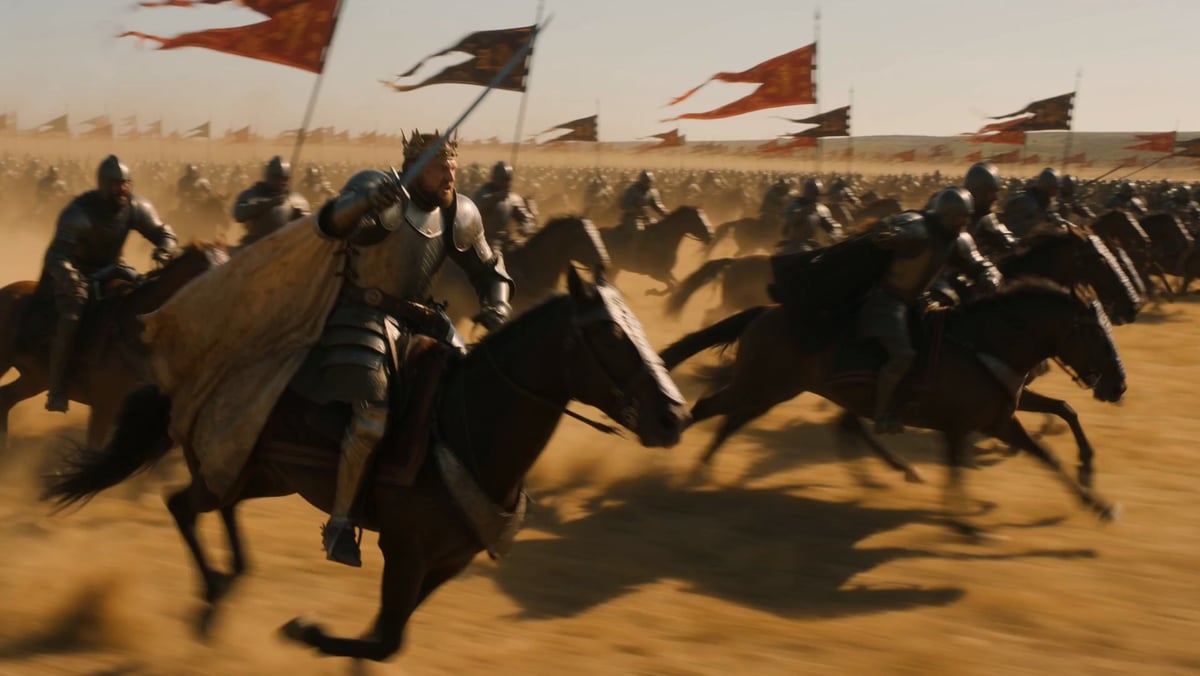
Hundreds of mounted medieval knights thunder across the battlefield, kicking up golden dust.
The king rides at the very front of the cavalry, sword raised while already charging.
The king roars:
“Ride to death!”
His shout is not a separate speech moment.
It immediately transforms into the raw, thunderous battle roar of the entire cavalry.
The knights do not repeat clean spoken lines.
They erupt into fierce war cries while continuing the charge.
Banners whip violently, cloaks snap in the wind, armor flashes in warm sunlight, and hooves shake the earth.
2–4s:
Both cavalry forces charge toward each other.
The enemy cavalry emerges through the dust from the opposite direction.
The two armies close the distance rapidly.
The camera stays low and dynamic from side and three-quarter angles, tracking horse legs, armor, shields, spears, swords, and whipping banners.
The pressure and speed of the approaching collision must feel intense and massive.
4–6s:
The two cavalry forces collide head-on.
Horses rush past each other, knights swing swords and spears, shields crack, spears snap, and riders are knocked from their saddles.
Some horses stumble from the force of the collision.
Some knights crash into the dust.
The impact must feel heavy, chaotic, and physically real, not weightless or game-like.
6–9s:
The battlefield immediately turns into a massive close-quarters melee.
Mounted knights, fallen riders, and infantry are all mixed together.
Swords clash, shields slam, spears break, armor plates collide, and soldiers grapple in the dust.
Show many clear combat moments, not just a shaking crowd:
one knight slams an enemy with his shield,
two knights lock swords and push against each other,
a fallen rider gets back up and re-enters the fight,
another knight ducks under a broken spear and counters with a sword strike,
two armored soldiers grab and shove each other through the dust,
a horse pushes through the chaos while riders fight around it.
The melee should feel crowded, brutal, fast, and readable.
The action must show actual knights fighting, blocking, striking, shoving, and struggling.
9–11s:
The king is now fighting on foot in the middle of the battlefield.
His armor and cloak are covered in dust and sweat.
He fights hard, but not effortlessly.
He blocks an enemy sword, pushes forward with his shoulder, dodges a shield strike, and counters with a short heavy sword attack.
Horses and soldiers rush past behind him as the melee continues all around.
11–13s:
A powerful enemy knight appears in front of the king.
They move toward each other through the dust and clash swords with a heavy impact.
Their blades lock together.
Sparks and dust flicker between the crossed swords.
Neither man gives ground.
They push against each other with raw strength, armor grinding, arms trembling, faces tense with effort.
13–15s:
Final close-up sword struggle.
The king and the enemy knight hold their locked blades between them, faces extremely close.
The swords creak and tremble under pressure.
The king grits his teeth, breathing hard, eyes burning with anger and determination.
The enemy knight pushes back, equally intense.
Behind them, the battlefield continues in blurred chaos: horses rushing past, soldiers fighting, dust swirling, shields breaking.
End on a tight close-up of the king’s furious dust-covered face as he locks eyes with the enemy knight during the sword power struggle.
The final image should be the king and enemy knight face-to-face, blades locked, both straining with full physical force amid the raging battle.
Negative prompt:
arrows, arrow volley, flying arrows, archers, bows, castle, full castle view, castle wall, battlement, static frontal lineup, perfectly symmetrical army formation, frozen riders, identical poses, AI-looking crowd, gloomy blue-gray tone, cold rainy battlefield, night scene, too few soldiers, weak cavalry collision, no melee, only shaking crowd, unclear sword fighting, king winning too easily, weightless action, modern weapons, futuristic armor, anime, manga, cartoon, comic book, cel shading, 2D animation, video game, game cutscene, plastic CGI, toy horses, fake armor, rubber weapons, glowing magic effects, superhero movement, gore close-up, graphic dismemberment
A 15-second photorealistic live-action medieval fantasy battle sequence, edited like a high-budget epic feature film.
Multiple cinematic shots, dynamic cutting allowed, large-scale battle choreography, fast but clear action editing.
No BGM, no music, no score, no soundtrack.
Use only realistic diegetic sound: war horses thundering across dry ground, armor clinking, leather creaking, knights roaring, swords clashing, shields breaking, spears snapping, horses screaming, soldiers falling, heavy breathing, and the roar of a massive battlefield.
Every frame should look like a premium cinematic film still from a high-budget medieval fantasy war movie.
The visual tone should be warm, yellowish, dusty, and cinematic — a golden ochre battlefield palette, sunlit haze, dry dust in the air, warm highlights on armor, muted amber shadows, and a slightly aged epic film texture.
Avoid gloomy blue-gray color grading, cold rainy tones, night scenes, dark muddy images, or overly clean digital visuals.
Do not show a castle.
Do not show arrows.
Do not show archers.
The focus is cavalry charge, cavalry collision, brutal close-quarters melee, and the king’s sword struggle.
The frame should contain only battlefield, cavalry, enemy riders, infantry, horses, dust, swords, shields, spears, and hand-to-hand combat.
0–2s:
The scene begins with the cavalry already charging at full speed.
Use a low, fast side-tracking shot, not a static frontal lineup.
Hundreds of mounted medieval knights thunder across the battlefield, kicking up golden dust.
The king rides at the very front of the cavalry, sword raised while already charging.
The king roars:
“Ride to death!”
His shout is not a separate speech moment.
It immediately transforms into the raw, thunderous battle roar of the entire cavalry.
The knights do not repeat clean spoken lines.
They erupt into fierce war cries while continuing the charge.
Banners whip violently, cloaks snap in the wind, armor flashes in warm sunlight, and hooves shake the earth.
2–4s:
Both cavalry forces charge toward each other.
The enemy cavalry emerges through the dust from the opposite direction.
The two armies close the distance rapidly.
The camera stays low and dynamic from side and three-quarter angles, tracking horse legs, armor, shields, spears, swords, and whipping banners.
The pressure and speed of the approaching collision must feel intense and massive.
4–6s:
The two cavalry forces collide head-on.
Horses rush past each other, knights swing swords and spears, shields crack, spears snap, and riders are knocked from their saddles.
Some horses stumble from the force of the collision.
Some knights crash into the dust.
The impact must feel heavy, chaotic, and physically real, not weightless or game-like.
6–9s:
The battlefield immediately turns into a massive close-quarters melee.
Mounted knights, fallen riders, and infantry are all mixed together.
Swords clash, shields slam, spears break, armor plates collide, and soldiers grapple in the dust.
Show many clear combat moments, not just a shaking crowd:
one knight slams an enemy with his shield,
two knights lock swords and push against each other,
a fallen rider gets back up and re-enters the fight,
another knight ducks under a broken spear and counters with a sword strike,
two armored soldiers grab and shove each other through the dust,
a horse pushes through the chaos while riders fight around it.
The melee should feel crowded, brutal, fast, and readable.
The action must show actual knights fighting, blocking, striking, shoving, and struggling.
9–11s:
The king is now fighting on foot in the middle of the battlefield.
His armor and cloak are covered in dust and sweat.
He fights hard, but not effortlessly.
He blocks an enemy sword, pushes forward with his shoulder, dodges a shield strike, and counters with a short heavy sword attack.
Horses and soldiers rush past behind him as the melee continues all around.
11–13s:
A powerful enemy knight appears in front of the king.
They move toward each other through the dust and clash swords with a heavy impact.
Their blades lock together.
Sparks and dust flicker between the crossed swords.
Neither man gives ground.
They push against each other with raw strength, armor grinding, arms trembling, faces tense with effort.
13–15s:
Final close-up sword struggle.
The king and the enemy knight hold their locked blades between them, faces extremely close.
The swords creak and tremble under pressure.
The king grits his teeth, breathing hard, eyes burning with anger and determination.
The enemy knight pushes back, equally intense.
Behind them, the battlefield continues in blurred chaos: horses rushing past, soldiers fighting, dust swirling, shields breaking.
End on a tight close-up of the king’s furious dust-covered face as he locks eyes with the enemy knight during the sword power struggle.
The final image should be the king and enemy knight face-to-face, blades locked, both straining with full physical force amid the raging battle.
Negative prompt:
arrows, arrow volley, flying arrows, archers, bows, castle, full castle view, castle wall, battlement, static frontal lineup, perfectly symmetrical army formation, frozen riders, identical poses, AI-looking crowd, gloomy blue-gray tone, cold rainy battlefield, night scene, too few soldiers, weak cavalry collision, no melee, only shaking crowd, unclear sword fighting, king winning too easily, weightless action, modern weapons, futuristic armor, anime, manga, cartoon, comic book, cel shading, 2D animation, video game, game cutscene, plastic CGI, toy horses, fake armor, rubber weapons, glowing magic effects, superhero movement, gore close-up, graphic dismembermentDusty%20Orbit